
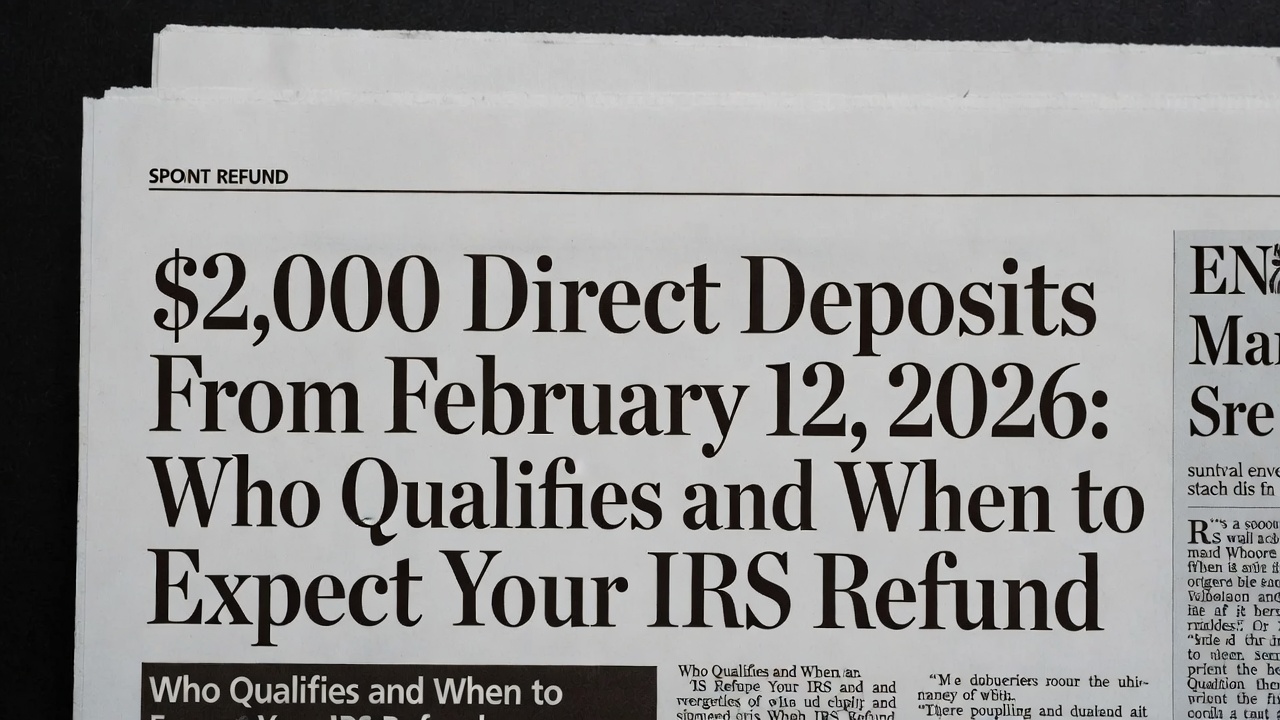
Federal $2,000 Payment Coming February 2026 – As February 2026 approaches, many Americans are asking whether a federal $2,000 payment will be issued and who might qualify. With the cost of rent, groceries, utilities, and healthcare continuing to rise, families are paying close attention to any news about possible government support. For retirees, working households, and people living on fixed incomes, even a one-time payment can provide meaningful short-term relief.
When budgets are tight, an extra deposit can help cover urgent expenses. Some families may use the money to catch up on overdue bills or manage heating and electricity costs during winter months. Others might apply it toward groceries, prescription medications, or reducing high-interest credit card balances. While a single payment cannot solve long-term financial challenges, it can offer breathing room during difficult periods.
How Eligibility Is Typically Determined
Federal payments are usually based on income levels and recent tax records. In most cases, the government reviews information from the most recently filed federal tax return to determine whether someone qualifies. Income thresholds are set to focus assistance on low- and moderate-income households.

Social Security retirement beneficiaries, disability recipients, and certain veterans may also be considered under federal relief measures, depending on official guidelines. Eligibility rules are determined by law and can include factors such as residency status, filing history, and household size.
Accurate records are essential. If a person’s tax information is outdated, or if banking details and mailing addresses are incorrect, payments may be delayed. Keeping personal information current helps ensure that funds, if approved, are delivered without unnecessary complications.
It is important to understand that eligibility depends on official government decisions. Until policies are formally enacted and published, payment guidelines may change.

How Federal Payments Are Sent
When federal payments are authorized, they are typically distributed in phases. Direct deposit is usually the first method used because it is faster and more secure. Individuals who have bank account information on file with the IRS or relevant federal agencies are often prioritized for electronic transfers.
Direct deposits may begin in early February for those whose eligibility has already been confirmed. Additional deposits may continue through mid-February as more records are processed. Individuals without direct deposit details on file may receive paper checks or prepaid debit cards later in the month. Mailed payments often take longer due to printing and delivery time.
Phased distribution allows federal systems to manage large payment volumes efficiently. However, this process also means that not everyone receives funds on the same date.

Steps to Help Avoid Delays
To reduce the risk of delays, individuals should ensure that their most recent tax return has been filed if required. Filing electronically and choosing direct deposit remains the fastest method for receiving government funds. Double-checking bank account numbers and mailing addresses is equally important.
Monitoring official announcements from federal agencies helps prevent confusion. During periods when payment news spreads quickly online, misinformation can circulate. Relying only on verified government sources protects personal information and reduces the risk of scams.
Planning for Financial Stability
If a $2,000 payment is received, many households may choose to use it carefully. Paying down high-interest debt can reduce long-term financial strain. Setting aside a portion for emergency savings can provide protection against unexpected expenses later in the year.
Also Read:
 Stimulus Payment February 2026 – IRS Direct Deposit, Tariff Dividend and Tax Refund Fact Check
Thoughtful planning can help extend the value of a single payment beyond immediate needs. Careful budgeting supports stronger financial stability over time.
Conclusion
The conversation around a possible federal $2,000 payment in February 2026 highlights the financial concerns facing many Americans. Clear information about eligibility and distribution is essential for managing expectations. Keeping tax records updated and following official guidance remain the best steps for ensuring that any approved payment is received smoothly.
Disclaimer: This article is for informational purposes only and does not provide legal, tax, or financial advice. Payment eligibility, timing, and distribution depend on official government policies and individual circumstances. Readers should verify updates through authorized federal sources or consult a qualified professional before making financial decisions.
